

By Musa Luka Musa
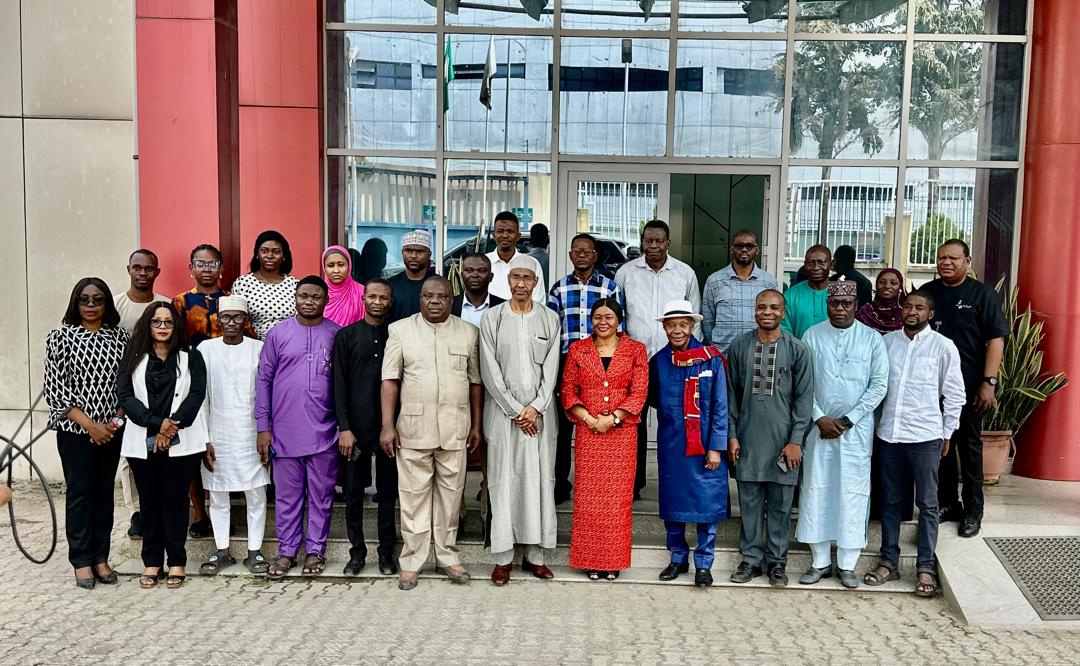
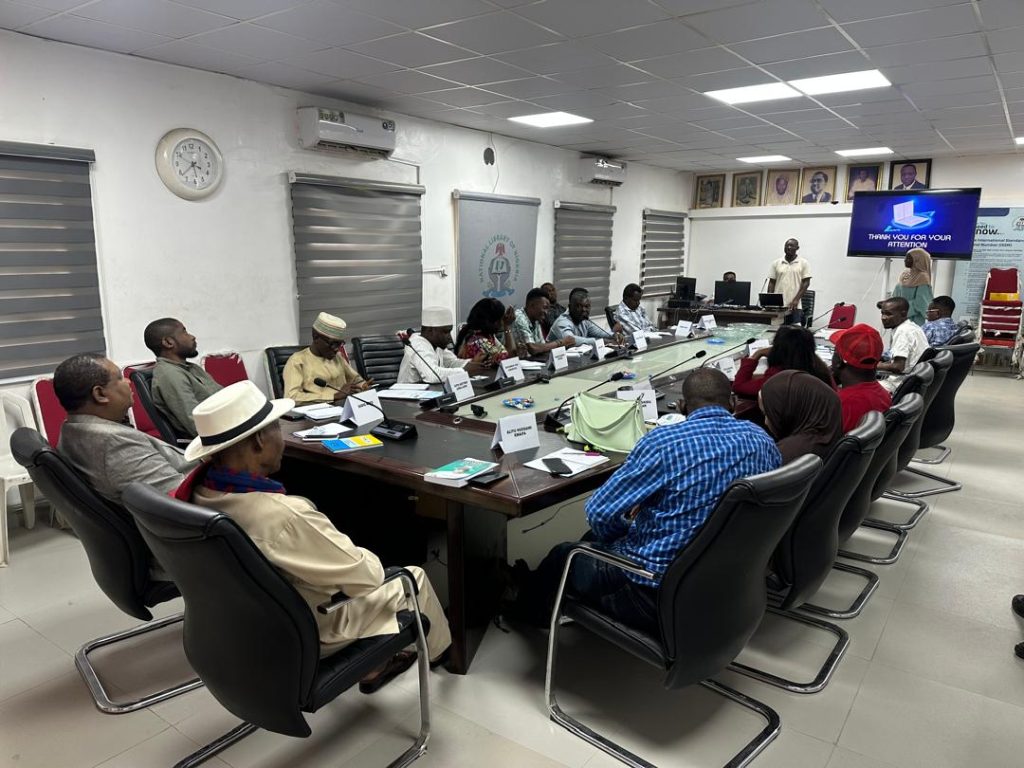
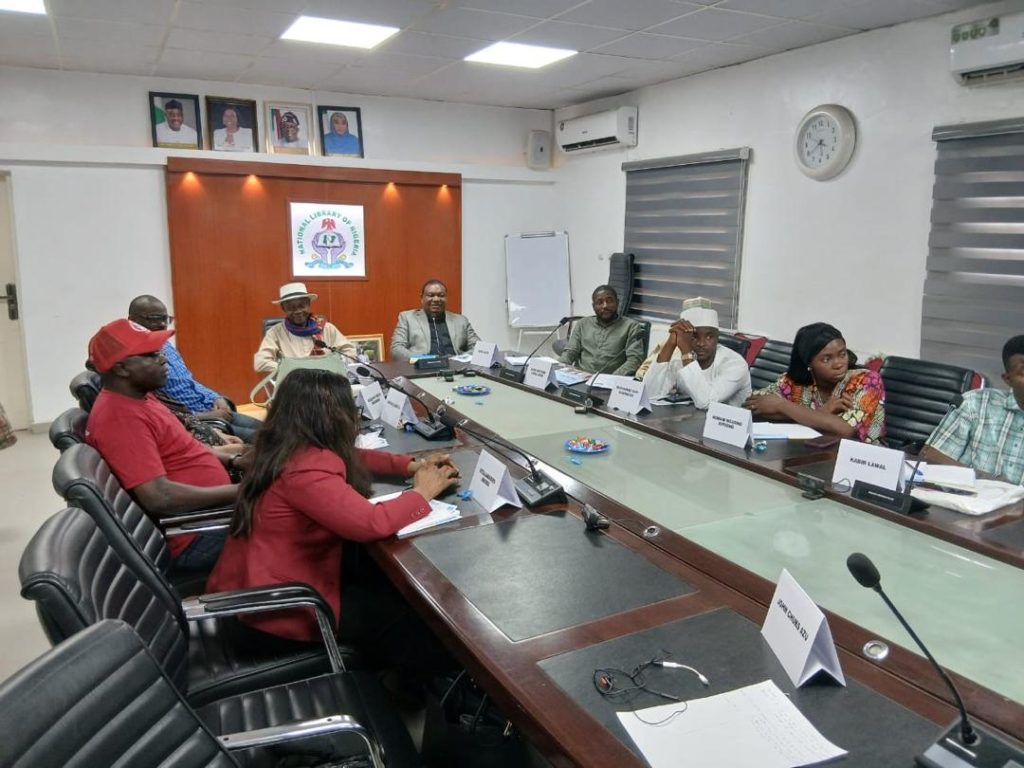
The Daily Trust Foundation, in partnership with the National Library of Nigeria and with funding support from the MacArthur Foundation, on Wednesday launched a three-day capacity-building workshop on document digitization for journalists in Abuja.
The workshop, held from November 26 to 28, 2025, has 25 participants drawn from various media organisations and other digital marketing organizations across the country.
Speaking at the opening ceremony, the Chairman of the Board of Trustees of the Daily Trust Foundation, Malam Bilya Bala, said the training was part of the Foundation’s Media Enterprise Lab initiative, designed to equip participants with emerging skills capable of opening new career frontiers.
“The project was established to broaden the scope of opportunities for journalists, as it is, by nature, meant to deepen skills in emerging fields and vocations for self-sustainability.”
He noted that in the last two years, the Foundation had trained journalists in digital marketing, film and documentary production, multimedia skills for freelance journalism, book writing and publishing, as well as non-profit media management.
According to him, document digitisation has become one of the most promising but under-explored fields in Nigeria.
“As you will learn from experts in the field, document digitisation is still at its infancy in Nigeria. It is a fertile field for investment, as millions, if not billions, of documents in government and private sector filing cabinets are waiting to be digitised,” he said.
“Those who take this training seriously will definitely have a second career from which they can get a resounding income. The few persons who have ventured into document digitisation are posting impressive balances in their bank accounts,” he added.
Malam Bala expressed gratitude to the MacArthur Foundation for funding the programme, describing it as “a rare opportunity you must not take for granted.”
He also commended the National Library for deploying its experts and facilities to support the workshop. “We are grateful to the National Library of Nigeria (NLN), which has agreed to collaborate with us to make it a reality,” he said. “On behalf of the board, I want to say thank you to Professor Chinwe Veronica Anunobi, the Chief Executive Officer of the NLN, who has deployed all her human and digital resources for this workshop.”
He urged participants to continue to take advantage of the Foundation’s online training platforms. “You can take courses on our DTF Digital Academy, and you can participate in our regular webinars,” he said.
In her remarks, the National Librarian and CEO of the National Library of Nigeria, Professor Chinwe Veronica Anunobi, described the initiative as a forward-looking contribution to the future of journalism.
“Let me start by congratulating the Foundation for the thoughtful and future career-minded decision,” she said. “Nothing can be as inclusive and cheering as a leader or stakeholder who plans beyond today for his constituency.”
Professor Anunobi said the National Library immediately accepted to partner with the Foundation because of the transformational value of the training. “For me, I always embrace with enthusiasm any programme that can change the trajectory of people’s competencies — their knowledge, skills and attitude,” she said.
She emphasized that technological advancements, including the rise of artificial intelligence, have transformed how information is created, preserved, and accessed, warning that media professionals who fail to adapt risk becoming obsolete.
“It is important to remind us of the transformative power of technology, which information curators, providers, and all stakeholders, especially in the global South, must key into or they will be a trophy,” she said. “Technology has changed and continues to change the what, how, and why of information packaging and access.”
She noted that digitisation offers journalists and information managers fresh relevance both during active service and at retirement. “One salient way of adding value to your agency’s mandate — and ensuring relevance beyond the core of the present duty — is having the capacity to change analog information to digital,” she said.
The National Librarian traced the evolution of digitisation and explained why it remains critical for modern information management. “Digitisation, which started in the 1930s theoretically, came practically alive in 1957 when the first digital image was created and became very popular in the 1990s,” she said. “Thereafter, digitisation became the most feasible method of not only sharing information, but ensuring that documents are handy, safe, and available for posterity.”
She added that digitisation goes beyond merely scanning documents. “It requires much more than just scanning. The skills range from selecting what to digitise, preparing them for digitisation, scanning them, and making them findable — that is to say they must be interoperable with metadata and ISO standard formats,” she said.
She urged participants to be mindful of copyright and Creative Commons licensing principles as they build competence, adding that the workshop could mark a turning point in their professional journey.
“Today begins a journey that will serve as a bedrock to greater strides in your life. So, take it seriously — every bit of it — and continue from where they would have stopped you,” she said.
Earlier, the Programme Director of the Daily Trust Foundation, Dr. Theophilus Abbah, welcomed participants and expressed appreciation to the Foundation’s board members and the National Library for their support in making the training possible.
