


Lami Sadiq, the former Group Investigations Editor of Media Trust won several Journalism awards. Her multimedia investigative reports about organ harvesting syndicates and how they permanently damage the lives of young men won the Wole Soyinka Investigative Reporting award for the print category in 2023 and television category in Her story further won the Nigerian Media Merit Award (NMMA) for investigative reporting in. In this interview she explains how the support she received from the Daily Trust Foundation aided her reporting for the award-winning stories.
In the last three years, you came under the kleiglight in journalism in Nigeria. You won several media awards. Narrate to us the turning point in your journalism career.
In 2019, I was in the middle of making a career change. I had been covering Plateau State for about eight years, and I was going through a professional crisis. At that time, I had faced threats to my life, harassment, and at one point, my car had been attacked and damaged. So, of course, my family was concerned for my safety, and they began to pressure me to make a career switch. It was in the middle of the turmoil that I was selected for the Wole Soyinka Female Reporters Leadership Project. After three months of the mentorship project, my encounter with mentors such as the late Rotimi Sankore and Mr Lekan Otufodunrin completely eased my heart and changed my mind about leaving the profession.
It was then that I decided to face up to whatever professional crisis I was going through. I became more intentional about the stories and began to see journalism as more than a job, but an integral part of my life. By the next year, I was transferred to Kaduna to coordinate editorial activities for Kaduna and the six states in the north central. I then began to mentor journalists and to encourage reporters to
pay attention to quality, long-form writing, I became picky about the stories I wanted to tell and so, I started to read what other journalists beyond the shores of Nigeria were working on, and I started to look out for more national and international fellowship opportunities to broaden my network, strengthen my capacity and learn from other cultural experiences.
One of the stories you did that made an impact was about organ harvesting. How did you come up with the idea?
I was simply at the right place at the right time. I was at a place where a parent of one of the victims was narrating how his son was lured to sell his kidney and how, after reporting the case to the Nigerian Police, nothing was done. I listened carefully and later had a side discussion with the parent. At first, he appeared reluctant and said journalists had failed him in the past. If I remember clearly, he said he had narrated his ordeal to journalists, and after assuring him that they would help him, nothing came out of it. He suspected those he spoke with were later compromised. I assured him that this time, it would be different. So reluctantly, he gave me his number and that started the process of building trust. Of course, he made his son accessible to me and from there, I had access to other victims, and the story took off from there.
What were the challenges you faced in carrying out the investigation?
The challenges came at the beginning, getting to earn their trust, and even after I did, I also needed to earn the trust of other victims. I am happy the parents saw the bigger picture. From the start, they understood that Nigeria is not an easy country to get justice in and that the rich and powerful have a way of escaping justice. So from the start, the aim was to bring awareness and to at least stop the chain of picking young boys from low economic backgrounds in the name of ‘donating’ kidneys. Secondly, another challenge came about when I tried to get important information from the Federal Ministry of Health, and despite efforts like FOI requests, calls,
and multiple physical visits, I was practically ignored. That attitude delayed the story for at least a month, and at the end, we had to go ahead without the information.
The major challenge came about after the story was published. Of course, it made too many people look bad; those directly involved,
If there is one thing I am clear about is that I would not have been able to tell that story without the funding that came from the Daily Trust Foundation. Investigative reporting is generally expensive, and that is why a lot of stories go untold
such as the indicted hospital and medical officers, but also regulatory agencies. So, of course, those indicted felt the need to try to discredit the story, and when they couldn’t, they elicited the help of colleagues. Of course, I faced a lot of harassment, both physically and online. However, if there is one thing I am proud of is that we are seeing some kind of reform in the area of regulation. The Federal Government has admitted that the story exposed a gap in regulation and, in March this year, unveiled the standard guidelines for establishing and coordinating organ/tissue transplantation services in Nigeria. This is one of the biggest impacts we have seen, and it makes all the challenges worth it.
What shocks did you experience on the field?
The first was seeing how young the boys were. You didn’t need to even ask about their age; a simple physical examination was enough. And then seeing the long single scar on their fragile bodies also shocked me. I knew they had their kidney removed, I was expecting to see the scars, but coming face to face with about five boys with the same scar was shocking. Then, some of the revelations were equally shocking, especially when research was pointing to the fact that more and more foreigners desperate for kidneys and, of course, unable to wait in line in the global north, were now turning to countries like Nigeria to get the surgeries done. This not only shocked me but also scared me. It meant they were using our youths, as, for lack of a better word, spare parts.
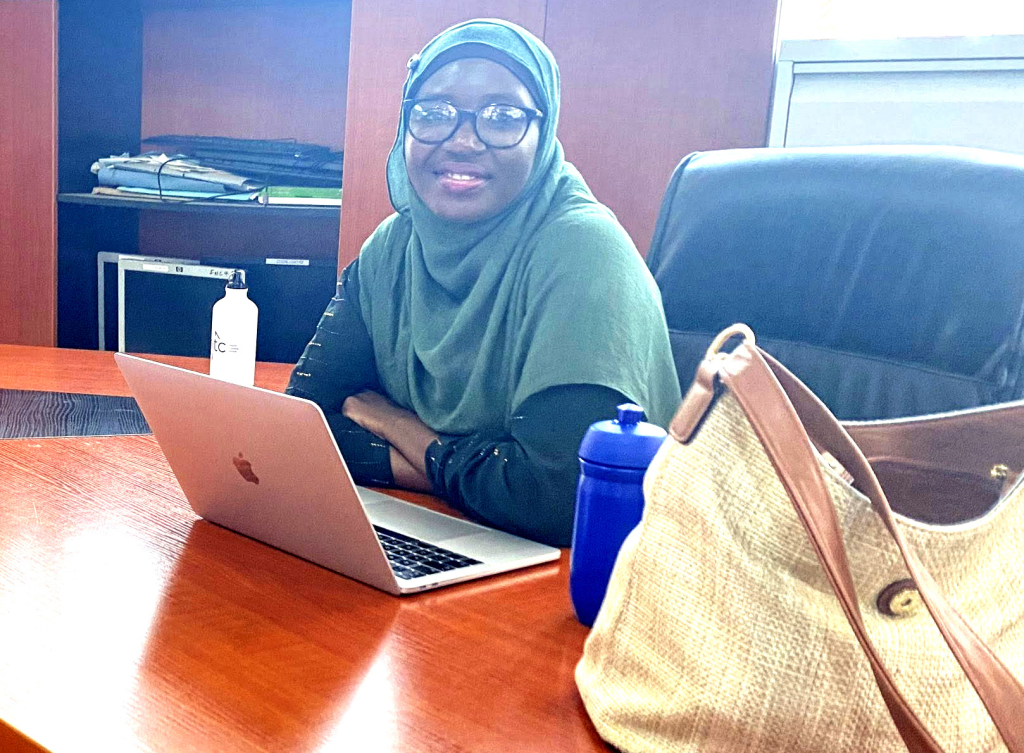
You participated in investigative reporting workshops organised by the Daily Trust Foundation. How did they help build your capacity for the journalism you do now?
I think I am one of the lucky ones who have not only benefited from Investigative training by the Daily Trust Foundation, but also benefited from free mentorship by the Foundation. The Daily Trust Foundation trainings have provided me with hands-on training in core investigative techniques such as data sourcing and analysis, fact-checking, the use of freedom of information (FOI) requests, and many others. Most importantly, the training has built my confidence, challenged and motivated me to step out of my comfort zone and begin to do something special.
I mentioned earlier that I get to have free mentorship, and that is because of the free access I have to Dr. Theophilus Abbah to discuss and refine my story ideas and, often, discuss the best strategies and approaches for a story.
How helpful was the funding from the Daily Trust Foundation in carrying out your investigation?
If there is one thing I am clear about is that I would not have been able to tell that story without the funding that came from the Daily Trust Foundation. Investigative reporting is generally expensive, and that is why a lot of stories go untold. Funding motivates you, it keeps
you grounded and focused on the project, and it also helps make your objective clear.
With funding, your logistics are covered, and funding brings you closer to the right sources. Remember, you need to pay fixers who are insiders who can connect you to the real action you seek.
You need to pay for security to get access to certain locations, and if you need to bring people out of a sensitive environment, you need to be able to pay to transport them out. Then there is the constant visit to government agencies, and if you don’t have adequate funding, you may just visit once and give up. But funding motivates you to visit multiple times, and it just helps drive you to do due diligence on the story.
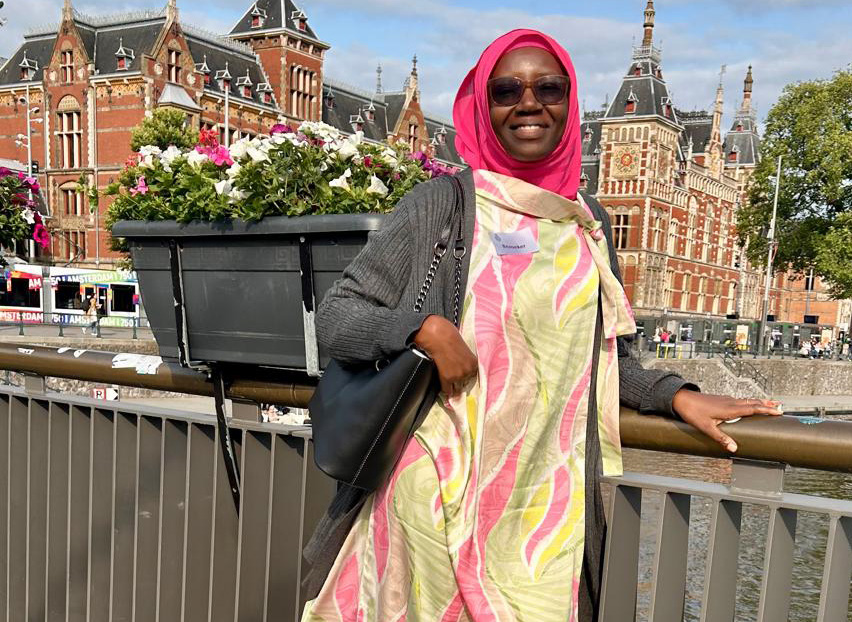
What words of encouragement do you have for upcoming investigative reporters?
Remain strong, fearless, and don’t give up. And always remember to pass on the baton to the next generation.
What do you aim to achieve in your journalism career in the near or distant future?
I would like to believe that I have made some form of contribution to the journalism space, no matter how little it is. I would most likely love to continue to tell stories that make an impact. Most importantly, I aim to see that my stories give marginalised people a voice; for the world to hear their stories, their truth. Secondly, I am at a stage in my career where I feel responsible in part for shaping what journalism would look like in the future. I am happy to play a role in guiding and nurturing the next generation of journalists, especially women who I believe have the potential to go further and beyond our generation.
What is your advice to the Daily Trust Foundation board and the Foundation’s funders?
Hmmm, I think what I have sounds more like a prayer than any form of advice. This is because of how I have been impacted by the Daily Trust Foundation. I pray that God sustains the vision of the Foundation. I pray it continues to nurture, motivate, and sustain this profession. I pray God provides wisdom for the founders and the board in carrying out their duties. I pray God blesses them for the fantastic work they are doing. I also hope that they never get tired and they never give up in actualising the vision.
